Ranthamborenationalparkindia is an independent, private travel portal operated by The Indian Voyage (A Unit of Green View Voyage Pvt. Ltd.) and is not the official government website of Ranthambore Tiger Reserve
Booking of safari are subject to availability by official website for Ranthambore Tiger Reserve.

The Chronological Journey of Ranthambore's Tiger Legacies

The Chronological Journey of Ranthambore’s Tiger Legacies

The Chronological Journey of Ranthambore's Tiger Legacies

The Genesis of a Queen (1997–1999)-Machali

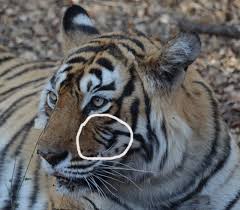
  • Monsoon Months, 1997: Machali (T-16) is born. She inherits her literal name (meaning “fish”) from a fish-shaped mark on the left ear of her face, a trait passed down by her mother. Since birth, she proves to be a highly dominating cub.
  • 1998 – 2009: Over this extraordinary decade, Machali’s immense global popularity and comfort in front of cameras helps the Indian government earn nearly US$100 million in tourism and conservation revenue.
  • 1999: At the age of two, the ferocious Machali begins hunting entirely on her own. This first sign of independence culminates in her aggressively taking over a major portion of her mother’s prime territory.

The Rise of the "Lady of the Lake" (2001–2004)

  • December 2001: Machali gives birth to her first litter—one female (Sundari T-17) and two males (Broken Tail and Slant Ear)—sired by a large male tiger named Bamboo Ram. By the end of December, the cubs separate from her. Soon after, Bamboo Ram passes away from old age.
  • Early 2002: A dominant male named Nick Ear takes over Bamboo Ram’s territory. Machali mates with him and gives birth to her second litter in April 2002: Jhumru (T-20, male) and Jhumri (female).
  • July 2002: Tourists catch their first glimpses of the young cub Jhumroo (T-20), who is destined to become a massive masculine icon.
  • End of 2004: Machali mates with a third male tiger known as X-male.

A New Generation Emerges (2005–2006)

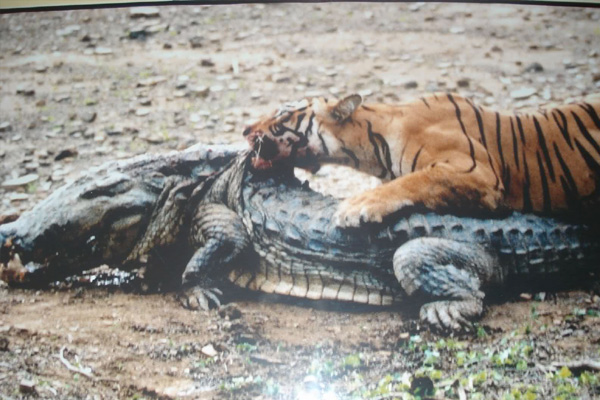
  • March 2005: Machali gives birth to her third litter from X-male: Sharmeele (meaning “shy” in Hindi) and Bahadur (“brave”). Around this period, she makes history by engaging in an exceptional, documented duel with a 14-foot-long crocodile, thoroughly cementing her title as the “Crocodile Killer.”
  • 2005: Ustad (T-24) is born to father Jhumroo (T-20) and mother Gayatri (T-22). He grows into a mighty, attractive male who rules the reserve with an unconventional, fearless spirit.
  • Monsoon Months (July–September) 2006: Machali delivers her final famous all-female litter: Sundari/Satara (T-17), Athara (T-18), and Unnis/Krishna (T-19). They are spotted frequently by tourists by the end of October 2006.

Territorial Shifts & The Legend of "Zalim" (2007–2010)

  • December 2007: Satara (T-17) displays a dominant nature early on and leaves her sisters to explore her own territory around the base of the Ranthambore Fort.
  • 2007 – 2008: Dollar/Zalim (T-25) is born to T-22 and Jhumroo (T-20), making him a direct descendant of Machali. Initially mistaken for a female due to his elusive sub-adult years, he eventually develops a fierce, vehicle-chasing reputation, earning the name Zalim (cruel/tyrant).
  • Early 2008: Satara (T-17) becomes completely independent. In a stunning display of power, she fights her own mother, Machali, to claim the park’s prized lake territory. Ousted from the lakes, an aging Machali establishes a new base in the Lakkarda region. Sister Unnis (T-19) claims the prey-scarce Mandoop plateau, while Athara (T-18) settles in Phoot Kot.
  • July 2010: Ustad (T-24) faces his first serious controversy when he is charged with killing a villager near his zone.
  • Late 2010: T-19 (Krishna) mates with the dominant Star Male (T-28) and temporarily becomes elusive in the dry streambeds of Mandoop. Concurrently, Dollar (T-25) mates with the Kachida Female (T-5), resulting in the birth of twin female cubs: Bina 1 (Binaek) and Bina 2 (Binado).

Miracles and Escalating Tension (2011–2012)

  • February 2011: Tragedy strikes when the Kachida Female (T-5) dies from internal hemorrhaging. In an event that shocks the wildlife research world, the aggressive male Dollar (T-25) steps in. Defying normal male tiger behavior, he protects, shares meals with, and raises the orphaned twins (Bina 1 & Bina 2) like a mother.
  • Summer 2011: T-17 (Satara) expands her territory into the Kachida valley following T-5’s death. Meanwhile, T-19 (Krishna) emerges from hiding with three cubs and aggressively claims the Lahpur Valley, establishing the park’s largest female territory.
  • March 2012: Ustad (T-24) is linked to a second human kill. Despite an advisory sent to the National Tiger Conservation Authority (NTCA) recommending relocation, he is allowed to remain free.
  • Early May 2012: T-17 (Satara) successfully delivers three cubs, with Dollar (T-25) assumed to be the father.
  • October 2012: Ustad (T-24) claims a third human victim—another forest guard. Local panic mounts as villagers report that his fear of humans has faded completely.
  • November 2012: Wildlife authorities officially order the relocation of the newly matured twin sisters, Bina 1 and Bina 2, to help balance other forest territories across the state.

Relocations & Captivity (2013–2015)

  • January 23, 2013: Bina 1 and Bina 2 are successfully tranquilized and transported by road out of the reserve, leaving their frequent courting partner, Sultanpur (T-24), behind.
  • May 8, 2015: Tragedy peaks when Ustad (T-24) mauls veteran forest guard Rampal Saini to death near the fort road.
  • May 16, 2015: Following intense public outcry and protests from forest guards, Ustad is tranquilized and moved 400 km away to a tight enclosure at Sajjangarh Biological Park in Udaipur. This triggers a massive global media storm (covered by the BBC and Al Jazeera) and intense legal petitions from tiger lovers who argue the deaths were accidental.

The Passing of the Ancients (2016–2019)

  • August 18, 2016: The legendary matriarch Machali (T-16) passes away peacefully at the extraordinary age of 20, breaking records as the world’s oldest-surviving wild tigress. She is honored posthumously with a commemorative Indian postal stamp and a TOFT Lifetime Achievement Award.

“Machali’s royalty still resounds in the jungle. Her genes spread far and wide, permanently changing the landscape of tiger conservation.”

  • January 2019: The next grand chapter begins as young cubs Riddhi (T-124) and Siddhi (T-125) are born to the park’s dominant queen, Arrowhead (T-84) (granddaughter of Machali).
  • January 2020: Ranthambore mourns the loss of the tender father Dollar / Zalim (T-25). At age 15, his body is recovered near Sanwata village following a fierce, fatal territorial clash with a younger male.

Sibling Wars & Shakti's Dominion (2020–2023)

  • December 2020: Sibling harmony shatters. Siddhi initiates a bitter territorial war by violently clashing with her own mother, Arrowhead, in Zone 3 to claim her own kingdom.
  • January 19, 2021: The sister blood feud between Riddhi and Siddhi peaks over a deer kill. Riddhi is severely mauled, sustaining deep lacerations and a torn tongue. In a historic intervention, veterinarians administer 12 to 14 surgical stitches directly onto Riddhi’s tongue before releasing her. Riddhi relentlessly pushes back, conquering the prime water bodies to become the undisputed “Queen of the Lakes.”
  • June 20, 2021: Concurrently, Tigress Shakti (T-111)—daughter of Krishna (T-19)—solidifies her domain in the Lakarda Forest Range (Zone 4 & 5). Forest department cameras trap an exciting milestone as she is recorded alongside her first major litter of four cubs near the Aadi Dagar drain.
  • December 28, 2022: After spending his final years struggling with chronic illness, Ustad (T-24) passes away in captivity at Sajjangarh Biological Park.
  • February 2023: Machali’s iconic daughter, T-19 (Krishna), passes away from natural age-related decline at the age of 16, marking the end of an era for the direct second-generation lake protectors.

The Modern Era (2024–2026)

  • 2024: Riddhi (T-124) firmly rules the historic core structures of Padam Talao, Malik Talab, and Raj-Bagh. Her young sub-adult male cubs—Shubh (T-2505) and Labh (T-2506)—sired by tiger T-120, become absolute sensations on Instagram and Facebook. Local drivers, naturalists, and top wildlife photographers frequently post clips of Shubh and Labh confidently resting directly on the safari tracks in Zone 3 and Zone 4, creating legendary “traffic jams” of safari gypsies.
  • January 2026: In a sweeping regulatory move to address long-standing conservation concerns and human interference, a strict ban on mobile phones during safaris is implemented inside Ranthambore to eliminate human distractions and protect the wild animals’ natural hunting behaviors.
  • June 2026 (Present Day): The total population in the Ranthambore landscape thrives successfully, supporting an estimated 75 to 80+ tigers. The legacy continues strong as Tigress Shakti (T-111) firmly holds her territory in the Lakarda Forest Range, Semli, Berda Valley, and Aadi Dagar (Zones 4 & 5), where she is currently being tracked raising her newest litter of two cubs. Meanwhile, her cousin Riddhi’s lineage continues to dominate the lake empire, keeping the royal family line as the premier highlight of Ranthambore.

Important Disclaimer & Travel Advisory:

This website is operated by The Indian Voyage (a flagship brand of Green View Voyage Pvt. Ltd.), a private, independent travel agency and tour operator, and is NOT the official website of Ranthambore National Park, the Ranthambore Tiger Reserve, or the Rajasthan Forest Department, nor is it affiliated with any Government of India tourism body. The comprehensive travel information provided on this page regarding How to Reach is meticulously curated based on 15 years of firsthand guest feedback and practical updates from guides , gypsy driver and naturalists.